Summary
- Weak glutes and a weak core don’t just limit your lower body. They quietly sabotage your squat, your deadlift, your overhead press, basically everything.
- Real core strength has almost nothing to do with crunches. It’s about your ability to resist movement, not create it.
- Women in particular benefit from dedicated glute and core training, both for performance and for protecting joints that are more vulnerable due to hormonal and biomechanical factors.
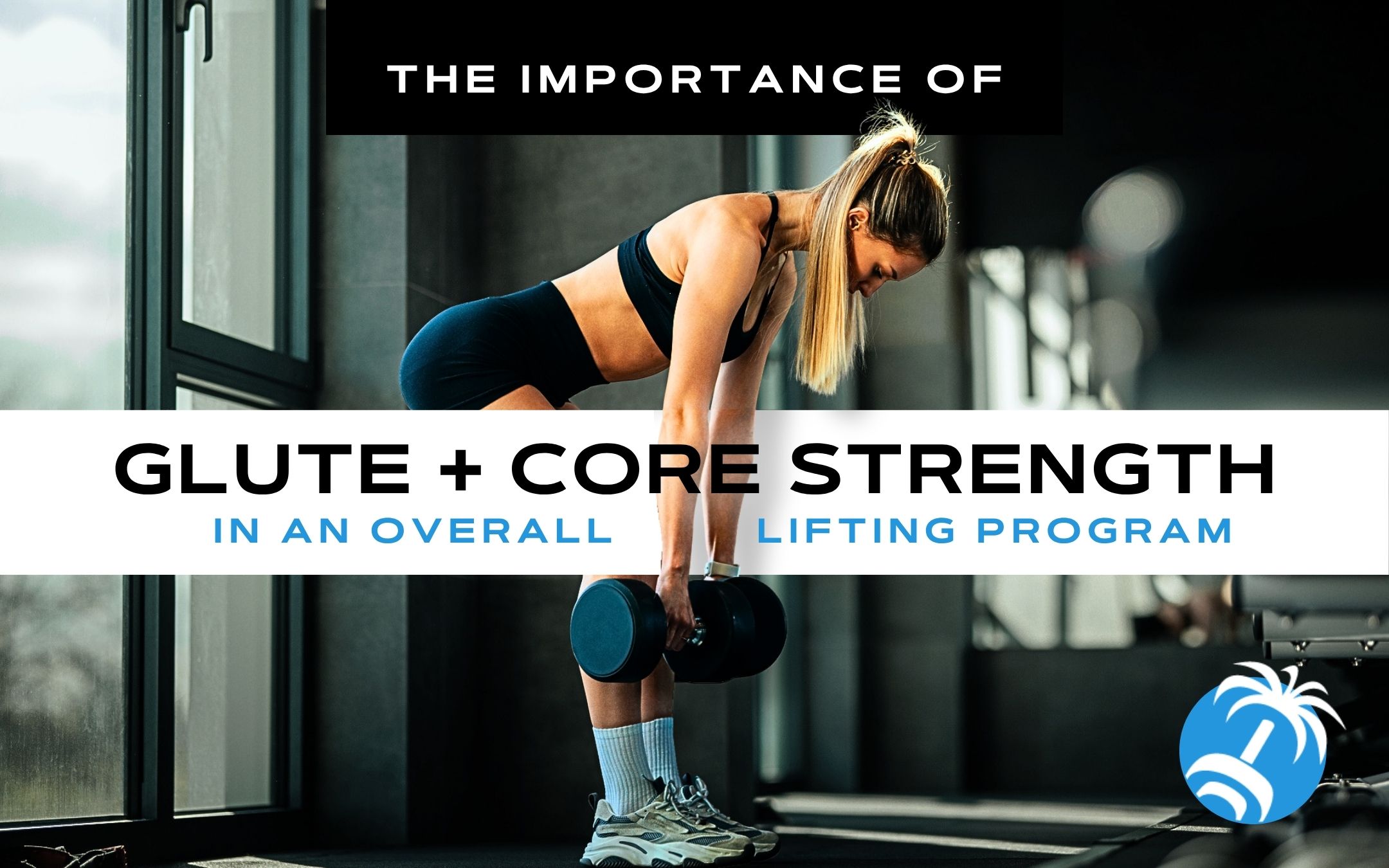
Most lifters obsess over their bench numbers or how much they can squat, but almost nobody walks into the gym thinking about their glutes and core as the foundation everything else is built on. That’s a mistake. Whether you’re chasing a bigger deadlift, trying to stay pain-free, or just want your training to actually hold up over time, glute and core strength is where it starts.
Why Glutes and Core Are the Foundation of Every Lift
Every major lift you do, upper body included, relies on force traveling through your core and hips before it ever reaches the bar.
How Weak Glutes and Core Affect Your Entire Body
When your glutes and core aren’t doing their job, other muscles and joints end up compensating. That often shows up as lower back strain during deadlifts, knee pain during squats, or shoulder issues during overhead pressing, none of which have much to do with the shoulder, knee, or back themselves. The real issue usually traces back to a weak link further down the chain.
The Connection Between Core Stability and Lifting Performance
A stable core is what allows force generated by your legs and hips to transfer efficiently into a lift instead of leaking out through poor positioning. Lifters with strong, stable cores consistently move more weight with better technique than lifters relying on raw strength alone.
What “Core Strength” Actually Means Beyond Crunches
Crunches train your abs to flex your spine. That’s not what your core actually needs to do during a heavy lift.
The Deep Core Muscles Most People Neglect
Your transverse abdominis, obliques, and deep spinal stabilizers matter far more for lifting than your rectus abdominis, the “six-pack” muscle crunches target. These deeper muscles are responsible for bracing and stabilizing your spine under load, which is a completely different job than curling your torso forward.
How True Core Strength Translates to Heavier, Safer Lifts
Real core strength is the ability to resist unwanted movement, resisting rotation, resisting extension, resisting your spine buckling under a heavy bar. That kind of stability is what lets you lift heavier weight safely, and it’s built through bracing and anti-rotation work, not endless crunches.
The Role of Glute Strength in Lower Body and Full-Body Movements
Your glutes are the largest and most powerful muscle group in your body, and most people barely use them.
Squats, Deadlifts, and Hip Hinges: Why Glutes Are the Engine
Squats, deadlifts, and any hip hinge movement rely on your glutes as the primary driver. When glutes are weak or underactive, other muscles like your lower back or quads pick up the slack, which changes your mechanics and limits how much weight you can safely move.
How Glute Weakness Leads to Knee, Hip, and Lower Back Pain
Weak glutes are one of the most common, and most overlooked, contributors to chronic knee, hip, and lower back pain in lifters. Without strong glutes controlling hip movement, the knees and lower back absorb forces they were never meant to handle.
How to Program Glute and Core Work Into Your Lifting Routine
Glute and core training shouldn’t be an afterthought tacked onto the end of a workout. It works best built into the structure of your program.
Prioritizing Activation Before Heavy Compound Lifts
Doing a few minutes of glute activation work, like banded lateral walks or glute bridges, before heavy squats or deadlifts helps ensure your glutes are actually firing when it matters most, rather than staying dormant while other muscles take over.
The Best Exercises for Building Functional Glute and Core Strength
Hip thrusts, Romanian deadlifts, and single-leg work build genuine glute strength, while planks, dead bugs, and anti-rotation exercises like Pallof presses build the kind of core stability that actually carries over to heavy lifting.
Why Women in Particular Benefit From Focused Glute and Core Training
The keywords bringing people to this page skew female for good reason. This training matters even more for women.
Hormonal and Biomechanical Factors That Make This Training Essential
Wider hip structure and hormonal factors that affect ligament laxity put women at a somewhat higher risk for knee and hip injuries, particularly around the ACL. Strong glutes and a stable core help control hip and knee alignment during movement, which directly reduces that risk.
Building Strength Without Bulking: Addressing a Common Concern
A lot of women hold back on heavier glute and core training because they’re worried about bulking up. That concern doesn’t hold up under the actual physiology involved. Building visible muscle mass requires a specific, deliberate combination of training volume, surplus calories, and time, and it’s not something that happens by accident from a well-programmed lifting routine. What you’ll actually notice is better performance, better shape, and joints that hold up over years of training.
Work With a Personal Trainer at Bayshore Fit to Build Your Foundation
How Our Trainers Design Programs Around Your Specific Weaknesses
Everyone’s glute and core weaknesses show up a little differently, which is why a generic program rarely fixes the problem. Our trainers assess how you actually move, identify where your foundation is breaking down, and build a program specifically around closing those gaps.
Personal Training in South Tampa for All Fitness Levels
Whether you’re brand new to lifting or you’ve been training for years and just can’t shake nagging pain, Bayshore Fit’s personal trainers in South Tampa can help you build the glute and core strength your entire program depends on. Get started with a trainer today and build a lifting foundation that actually holds up.